

Top moments and learnings from Collaborative 2026

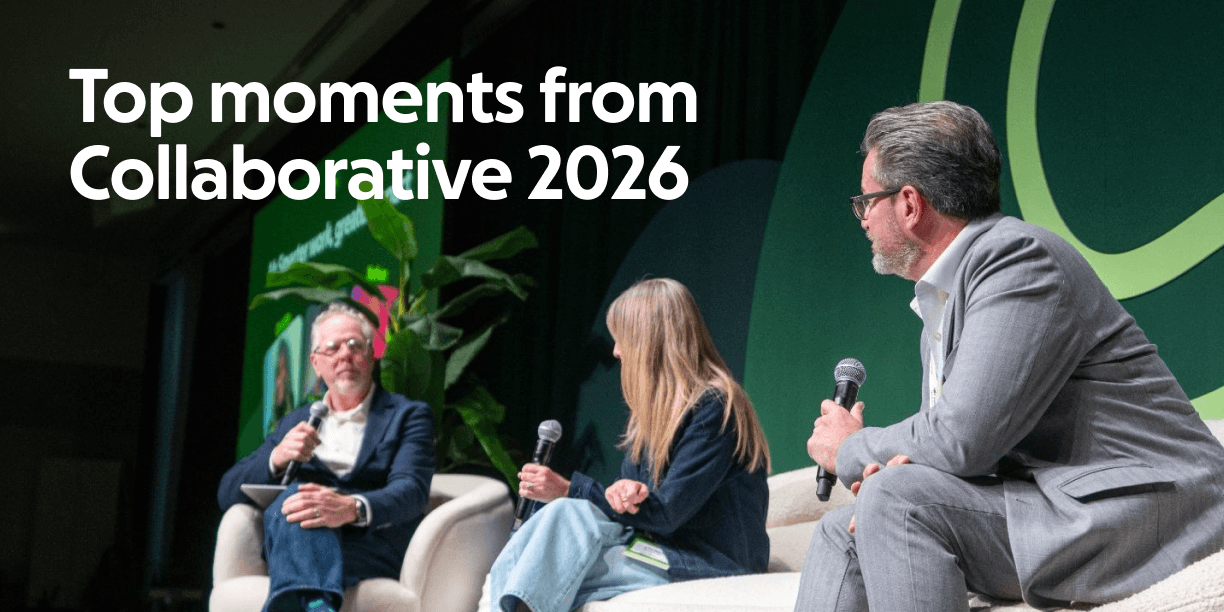
The fundraising landscape is shifting. At Collaborative 2026, nonprofit leaders gathered to name that reality openly and figure out what comes next.
Across keynotes, panels, and workshops, the conversation kept returning to a single idea: Generosity hasn’t disappeared. It has evolved. And the organizations best positioned for what’s ahead are the ones willing to evolve with it.
Explore the top moments and messages that defined Collaborative 2026.
Generosity is changing, not declining
Generosity hasn’t disappeared. It’s moved into networks, conversations, and moments that happen in real time, often outside traditional channels. The organizations best positioned for growth will be the ones that meet people where they are and make it easy to take action on their own terms.
Participation over transactions
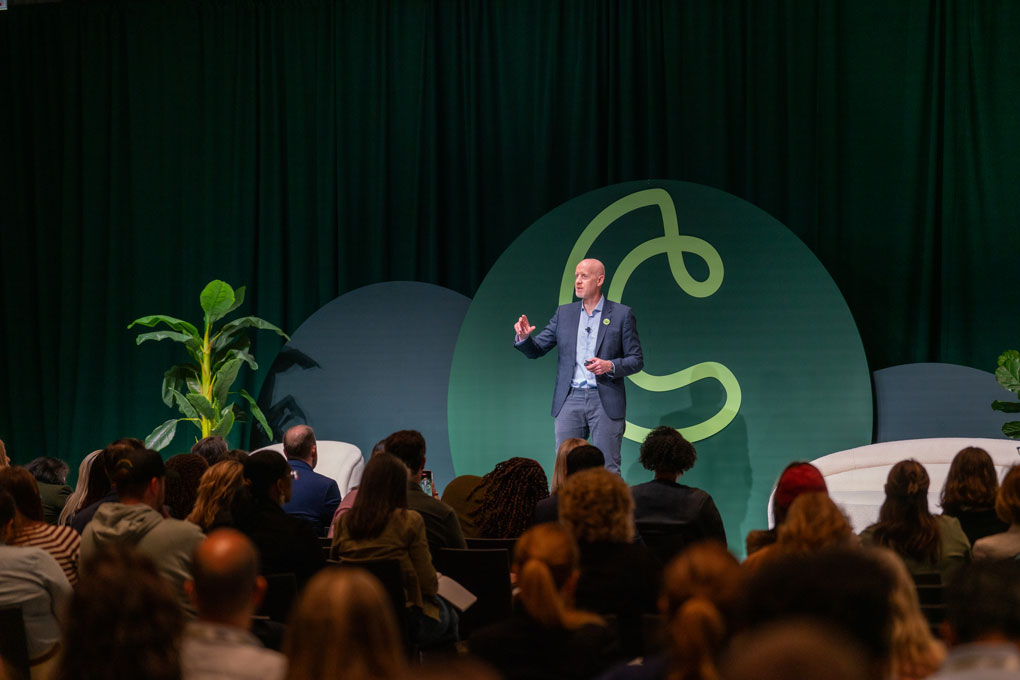
Younger supporters want participation and proximity, not one-way transactions. Trust is moving away from institutions and toward communities, relationships, and peer networks.
GoFundMe’s Gen Z report makes this concrete. Seventy-one percent of Gen Z adults gave in some form in the past week, but their biggest edge shows up in relational behaviors: direct giving to individuals, volunteering, advocacy, and informal giving. They’re eight percentage points more likely than other adults to publicly support or advocate for helping others, and 57% say family and friends shape their decisions.
Their generosity is immediate, personal, and driven by moments of connection.
The data makes this shift even clearer. Ninety-one percent of Gen Z adults who use community fundraising platforms also gave to nonprofits, making them 16 percentage points more likely to support nonprofits than those who give without using these platforms.
In other words, online fundraising platforms like GoFundMe don’t fragment the giving landscape. They reshape how people enter and move through it.
Today’s supporters aren’t just donors. They’re advocates, organizers, storytellers, and community builders. Engaging them well means meeting them where they are with experiences that feel natural to them, and having the technology and infrastructure to support every step of their journey: from seeing to sharing, from sharing to mobilizing, and from mobilizing to donating.
Hope is a leadership strategy
Keynote speaker Hamza Khan opened day 2 of the conference with a challenge: Stop treating hope as a passive emotion and start treating it as a practice.
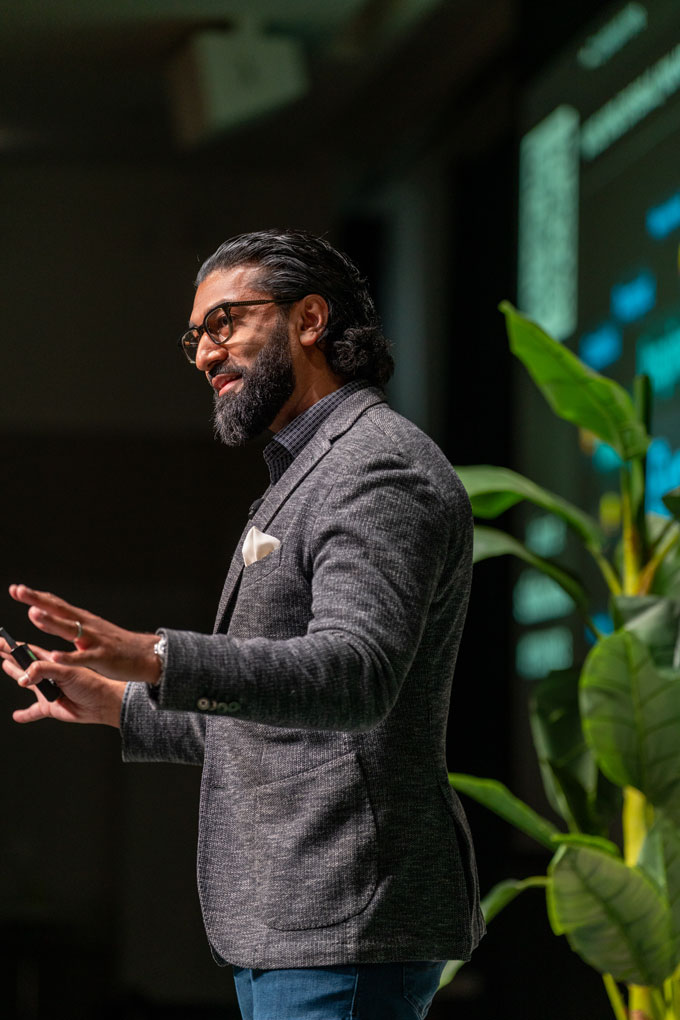
Khan pushed leaders to build organizations that don’t depend on any one person to function, framing leadership as the work of creating more leaders who create more leaders.
His core argument was that the nonprofit sector’s greatest long-term opportunity is converting compassion into coordinated action at scale. However, that only happens when hope is foundationally built into the culture, not just the messaging.
Hope without action is just a dream. But action without hope is a dead end.
That framing carried through every session that followed.
Sustainable growth depends on long-term relationships
So what does it take to turn hopeful leadership into durable growth? Two themes dominated the strategy sessions: recurring giving and supporter-led fundraising.
On the recurring giving side, leaders explored what Dave Raley called the “January 1 problem,”—the predictable drop-off in giving that follows the end-of-year surge—and how subscription-economy thinking can help solve it.
Recurring giving isn’t just a more predictable revenue stream. It’s a trust-building strategy.
Tunnel to Towers Foundation showed what this looks like in practice. By building its $11/month recurring ask directly into its brand identity, the organization made monthly support feel simple, emotional, and mission-connected. Doctors Without Borders uses recurring giving to create operational stability and emergency readiness, not just to smooth cash flow.
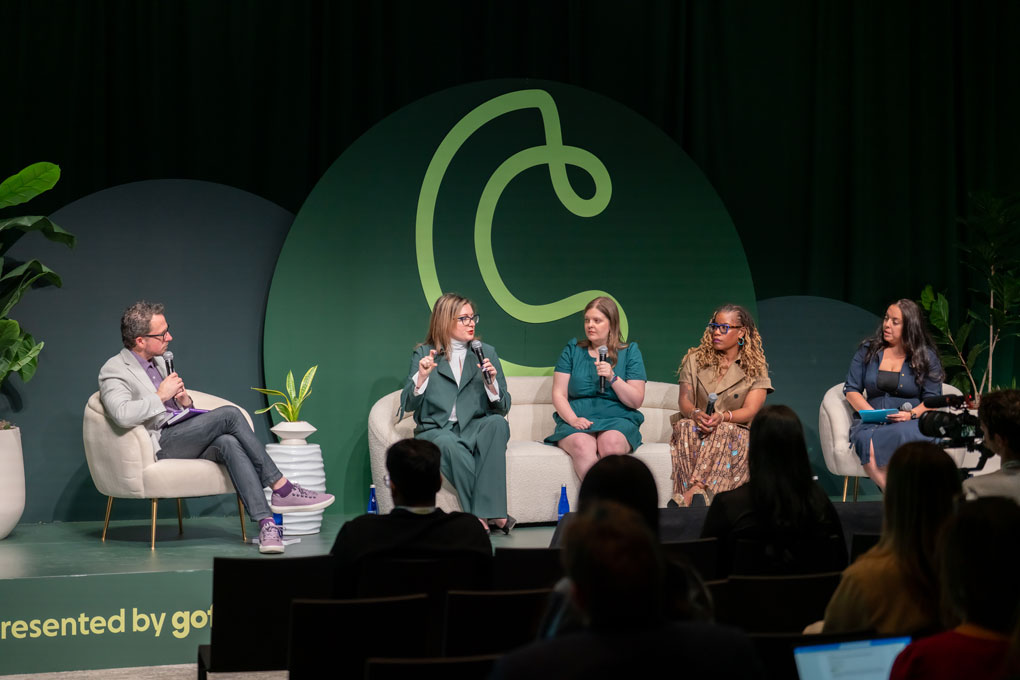
On the supporter-led side, American Cancer Society demonstrated how streamlining challenge fundraising can meaningfully improve fundraiser conversion. Organizations that empower supporters to spread the mission themselves expand beyond traditional donor acquisition models and reach people who would never have found them otherwise.
Technology should strengthen human connection
As organizations rethink how they engage supporters, they’re also rethinking the systems that power those relationships. Collaborative’s technology sessions weren’t about innovation for its own sake. They were about using innovation where it matters.
GoFundMe’s Chief Product and Technology Officer, Arnie Katz, and SVP of Product, Michal Russ, shared how small platform improvements led to outsized impact:
- A persistent donate button increased checkout entries by 5%.
- Improved activity feeds lifted donor conversion.
- Smarter recurring asks improved sustainer acquisition.
The compounding effect of incremental optimization matters more than most organizations account for.
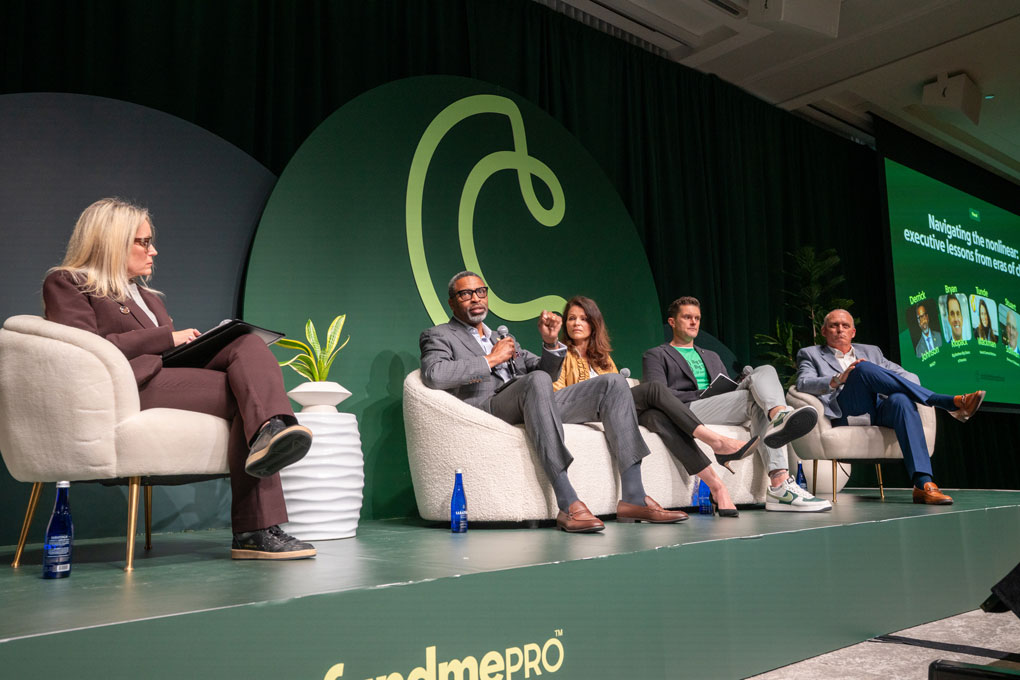
On the topic of artificial intelligence (AI), the message was consistent across sessions: Its value is in the capacity it creates for human-centered work, not the tasks it automates away. During “Navigating the nonlinear: Executive lessons from eras of change,” leaders pointed to practical applications that free staff to focus on higher-value, relationship-driven work:
- Big Brothers Big Sisters reduced volunteer onboarding time through AI-powered matching.
- World Central Kitchen uses automation while maintaining human review.
- NAACP leaders discussed the governance questions organizations need to answer before scaling AI tools, including how data, privacy, and mission alignment get protected.
The rapid-response fundraising session brought a different but related point. Jennifer Warga, VP of Consumer Marketing & Fundraising at American Red Cross, offered a five-part framework for organizations building crisis-ready infrastructure: clarity, coordination, communication, carry out, and course correction.
In short, the organizations that respond best during crises are the ones that prepare before crises happen. That means cross-functional collaboration, shared playbooks, and the donor trust built through transparency and storytelling long before an emergency arrives.
The organizations that thrive will adapt together
The closing session, led by GoFundMe Chief Customer Growth Officer, Steve Froehlich, tied it together. The future doesn’t belong to the organizations with the most resources. It belongs to the ones that combine mission clarity with a genuine willingness to change how they operate.
That means bringing a startup mentality into legacy structures, building cultures comfortable with ambiguity and iteration, and committing to experimenting, failing, and learning.
One idea came through every session: The future of fundraising is participatory, relationship-driven, and community-powered. Organizations that embrace that reality, and build for it, won’t just survive the shift. They’ll help shape what comes next.
Copy editor: Ayanna Julien
Subscribe to the GoFundMe Pro blog
Get the latest fundraising tips, trends, and ideas in your inbox.
Thank you for subscribing
You signed up for emails from GoFundMe Pro


Request a demo
Learn how top nonprofits use GoFundMe Pro to power their fundraising.