

Grants for nonprofits: 18 options to explore in 2026


Grants offer tremendous funding opportunities for nonprofits looking to scale, such as financing new programs, supporting capital campaigns, or adding a cushion to your overall budget. However, because grants are such a high-demand, time-consuming initiative, it’s critical to choose them wisely.
Below, we’ll tell you everything you need to know about nonprofit grants, including the benefits, types of grant funding, tips for choosing the right ones, options worth pursuing in 2026, and steps to successfully apply.
What are nonprofit grants?
Nonprofit grants are financial donations from foundations, government agencies, or corporations. The sums are often large enough to be a major gift and are typically awarded through an application process.
Unlike standard donations, which are typically unrestricted and used for various expenses, grants often come with specific rules and guidelines that dictate how nonprofits can use the funds. However, a growing trust-based philanthropy movement aims to transform typical power dynamics between funders and grantees, emphasizing strong relationships, community expertise, meaningful collaboration, and a deeper understanding of nonprofits’ challenges.
Still, you’ll need to stand out to engage with and secure the right grantmaker. As you select new grant opportunities and learn how to write a grant proposal effectively, remember to communicate your impact and provide tangible examples of what you plan to accomplish with the funding.
Benefits of grant funding
There are many benefits to securing a tax-exempt nonprofit grant, such as:
- Interest-free cash: Grants provide cash without the burden of interest, equity loss, or repayment obligations. The only investment required is the time spent on the application process (and possibly an application fee).
- Credibility: Grants signal to others that your nonprofit is serious and impactful. They enhance your reputation and offer a third-party endorsement that can attract donors.
- Awareness: Grants can expose your nonprofit to new audiences, and the press surrounding the accomplishment can expose your brand to potential donors and partners.
- Influence: Grant approvals can improve your chances of winning others. Grant foundations often view previous funding as a sign of trustworthiness and capability, making them more likely to approve future applications.
Common types of nonprofit grants
Nonprofit grants vary widely in their source, purpose, and structure. Below, we’ll explore some of the most common types of grants through the lens of these factors.
Funding sources
- Government grants: Federal, state, and local governments often offer grants to support nonprofit operations or administrations. The application process can be rigorous and highly competitive but worth the effort for recipients. You can find many opportunities on Grants.gov or by searching for local options online.
- Corporate grants: Corporate grants come from large companies, which typically reserve a percentage of their revenue for philanthropic purposes. Google Ads for nonprofits is one example of this type of grant.
- Foundation grants: Foundation grants come from philanthropic organizations—such as families, private and public groups, faith-based organizations, or community funds—to help advance causes or nonprofits in a specific locale.
- Seed and startup grants: Seed and startup grants are one-time grants for newly established nonprofit startups or early-stage programs that lack a funding track record.
- Emergency and rapid response grants: Emergency and rapid-response grants are short-turnaround grants disbursed quickly in response to crises, natural disasters, or urgent community needs.
- In-kind grants: In-kind grants provide nonmonetary support—such as technology, equipment, office space, or professional services—donated by corporations or foundations.
Funding purposes
- Launch: Launch grants fund the start of a specific project, service, product, or campaign.
- Technology: Technology grants often require you to spend the funding on software advancements or upgraded hardware.
- Infrastructure: Infrastructure grants are capacity-building grants that focus on solidifying a nonprofit’s operational and physical structures.
- General operations: General operations grants provide operating support for nonprofits to use as they see fit, wherever the funding is most impactful.
Funding structure
- Continuation grants: Continuation grants let you renew your grant. However, they require reaching milestones, using funds appropriately, meeting reporting deadlines, and keeping communications and relationships open between your nonprofit and the funder.
- Pass-through grants: Pass-through grants from the federal government provide funding to state and local governments for local distribution. Apply for these federal grants when you want to make a local impact.
- Competitive grants: Competitive grants require nonprofits to submit proposals explaining why they should receive funding. Reviewers then score these proposals based on specific criteria, with the highest-scoring proposals awarded the grants.
- Formula grants: Formula grants are noncompetitive. These grants provide funding for nonprofits that meet predetermined criteria. If you match the requirements, you can receive the funds.
How to choose the right nonprofit grants
Here are a few questions to consider before applying for a grant to ensure it aligns with your nonprofit’s needs and capacity:
- Requirements: First, are you eligible to apply? Review the grant’s eligibility criteria—such as geographic restrictions, organization type, or program focus—to confirm you meet all the requirements before proceeding.
- Grant purpose: Does the funding align with your nonprofit’s goals and current needs? Review the grant’s purpose carefully to determine if it fits your objectives. For example, reconsider applying for a technology grant if you’ve already built a modern data stack.
- Funding amount: Is the grant amount significant enough to justify the time and effort required to apply? Consider whether the potential funding will provide meaningful support to your nonprofit’s mission or initiatives.
- Return on investment: Will the benefits of securing the grant outweigh the costs of applying, including staff time and other resources? Think about how the funds could strengthen your nonprofit, launch new initiatives, or enhance long-term sustainability.
Taking the time to answer these questions can help you prioritize grant opportunities that are the best fit for your nonprofit.
Grants for nonprofits to explore in 2026
Not every grant will be the right fit for your organization. However, to jump-start your search, here are a few of the top nonprofit grants available.
Amazon Web Services (AWS) Imagine Grant
AWS for Nonprofits offers three Imagine Grant award categories:
- The Momentum to Modernize award offers funding for transformational technology infrastructure projects
- The Go Further, Faster award provides support for highly innovative projects that leverage cloud technology
- The Pathfinder award funds highly innovative, mission-critical projects that leverage generative AI
Grant packages range from $50,000 to $200,000 in financial support and up to $100,000 in AWS promotional credits. To be eligible for a grant application, you must be a nonprofit organization with a 501(c) status.
Bank of America Charitable Foundation Grants
Bank of America’s nonprofit grants focus on funding local organizations to help improve people’s financial wellness and meet community needs. The nonprofit areas include:
- Workforce development and education
- Economic mobility
- Community development and basic needs
Grant amounts vary by market and organization size. Past grants in smaller markets have ranged from $2,500 to $25,000, while grants in larger markets have ranged from $5,000 to $50,000.
Big Sea Wavemakers Grant
The Big Sea Wavemakers Grant is a competitive grant tailored for nonprofit organizations pursuing innovative marketing projects. This grant empowers nonprofits to transform their unique and impactful marketing ideas into tangible results. Offering up to $30,000 in marketing services, this grant supports nonprofits ready to launch groundbreaking advertising campaigns.
Recipients of the Wavemakers Grant gain access to Big Sea’s comprehensive expertise in nonprofit content marketing. Services provided include assistance in refining and defining your brand, clarifying your messaging, developing your website, designing marketing materials, and expanding your donor community.
Bloomberg Philanthropies Grants
Bloomberg Philanthropies looks to fund nonprofits supporting five key areas: the arts, education, the environment, government innovation, and public health. Grant proposals are by invitation only. Nonprofits can check the organization’s website for the latest news on grant competitions.
Coca-Cola Foundation Grants
The Coca-Cola Foundation provides grants to nonprofits with focuses on:
- Sustainable access to safe water
- Watershed conservation
- Disaster preparedness and response
- Recycling value chains
- Economic prosperity
- Employee giving
- Causes impacting Coca-Cola’s hometown community
In the last 40 years, the Coca-Cola Foundation has awarded more than $1.7 billion in grants worldwide.
Gates Foundation Grants
The Gates Foundation awards grants to nonprofits that achieve measurable impact in eliminating poverty, disease, and inequity worldwide. Grants account for over 90% of the organization’s charitable giving. U.S.-based 501(c)(3) organizations can apply for funding to make a meaningful difference.
Ford Foundation Grants
The Ford Foundation awards approximately 1,400 grants annually to nonprofits with transformative and scalable solutions to eliminate inequality. Opportunities and open fund grants change with time, so check out the organization’s website to see what’s available. You can also sign up for email updates to learn when new opportunities arise.
Google Ad Grants
Google provides several resources for eligible nonprofit organizations, including premium access to Google Maps, the YouTube Nonprofit Program, and Google Workspace for Nonprofits.
The company also provides up to $10,000 per month in Google Ads credit to boost your nonprofit’s marketing efforts. To qualify for Google Ad Grants, your organization must match your country’s nonprofit criteria requirements and not be a government entity, hospital, healthcare organization, school, or educational institution.
National Endowment for the Arts Grants
The National Endowment for the Arts is an independent federal agency committed to fostering the arts across the U.S. Each year, the NEA awards approximately 2,400 grants to nonprofit arts organizations, fueling a wide range of creative projects and initiatives.
NEA grants cater to a diverse spectrum of needs to support small and large organizations. The Challenge America grant specifically aids small nonprofits in extending arts programs to underserved communities, with grants valued at $10,000.
NBCUniversal Local Impact Grants
The NBCUniversal Local Impact Grants will award nearly $2.5 million to nonprofits in 2026 through 11 NBC and Telemundo-owned television station markets. Organizations with total expenses above $100,000 and under $1 million can apply for unrestricted funds for work in three specific areas:
- Youth education and empowerment: Programs that equip youth with the tools they need to succeed
- Next generation storytellers: Programs that develop pathways for emerging talent and youth voices to explore careers in the arts, news, sports, and entertainment
- Community engagement: Programs that enable individuals to engage with and volunteer in their communities
Robert Wood Johnson Foundation Grants
The Robert Wood Johnson Foundation works to improve the health and well-being of individuals and communities in the U.S. It focuses on major health issues, including access to care, healthy communities, and public health. The organization periodically issues requests for proposals for specific projects or research areas, each with particular guidelines and deadlines.
ServiceNow.org Partnership for Good Grant
The ServiceNow.org Partnership for Good Grant is a partnership between Accenture, Advance Solutions, GlideFast Consulting, and Plat4mation. It awards four nonprofit grants:
- Cause and Cure grant in collaboration with GlideFast Consulting supports nonprofit initiatives for communities facing health issues
- Disaster and Community Support grant in collaboration with Advance Solutions supports underserved communities and rapid disaster response
- Education and Youth Services grant in collaboration with Plat4mation supports learning and growth opportunities outside of traditional education
- Sustainability and Decarbonization grant in collaboration with Accenture supports nonprofits tackling climate change
Grant recipients for each category receive:
- Free ServiceNow instance, software, licenses, and services, totaling a value of up to $250,000 per grant in total contract value for a three-year period
- Up to 1,200 resource hours for discovery, design, and technical implementation from Partnership for Good Grant partners
- Expertise and guidance from certified ServiceNow experts throughout the implementation process
- A direct monetary grant of $100,000
Silicon Valley Community Foundation Grants
The Silicon Valley Community Foundation supports nonprofits focused on fostering strong and engaged communities that build equity for Silicon Valley residents. It offers wide-ranging community action grants and focused initiatives around financial stability, early childhood development, and housing.
The Kresge Foundation Grants
The Kresge Foundation seeks to expand opportunities in America’s cities through grantmaking and social investing. Over the years, it has strengthened pathways to opportunity for low-income people in American cities. Annually, the foundation gives more than 400 grants to nonprofits, averaging around $160 million in recent years.
The Rockefeller Foundation Grants
The Rockefeller Foundation is one of the world’s most influential and long-standing philanthropic organizations. Dedicated to promoting the well-being of humanity worldwide, it has provided billions in funding for groundbreaking initiatives across various sectors.
Here are some of the organization’s priorities:
- Health: Global health issues and support for health systems and healthcare access
- Food: More equitable and nutritious food access and improved agricultural productivity to combat climate change
- Power: Access to sustainable energy to end energy poverty and boost economic development
- Innovation: Innovative approaches to solving global challenges
- U.S. economic opportunity: Efforts to expand access to meaningful employment and promote economic stability
Walmart Foundation Community Grants
The Walmart Foundation provides local community grants (from $250 to $5,000) to nonprofits that directly benefit areas where local Sam’s Club or Walmart stores operate. Your nonprofit can use the funds in various areas:
- Creating opportunity
- Advancing sustainability
- Strengthening community
- Supporting racial equity
Wells Fargo Nonprofit Grants
Wells Fargo Community Giving supports nonprofit organizations through grants focusing on:
- Opening pathways to economic advancement
- Championing quality, affordable homes
- Empowering small businesses to thrive
Nonprofits interested in receiving an invitation to apply for a Wells Fargo Community Giving grant must register online and submit a grant interest form.
W.K. Kellogg Foundation Grants
The W.K. Kellogg Foundation supports children, families, and communities through four main priorities:
- Good food, strong and equitable food systems
- Good health and health equity
- Good early care and education
- Good jobs and family economic security
WKKF accepts applications throughout the year without deadlines or specific grantmaking cycles.
How to apply for grants for nonprofits
Once you’ve identified the types of grants that make the most sense for your organization, use these steps to find and apply for specific ones.
1. Research and identify grants
Use Grants.gov for federal opportunities, foundation websites for private grants, and peer networks for sector-specific programs. Filter by mission alignment, eligibility, and funding amount. For broader discovery, use Candid (Foundation Directory Online) for private foundation grants, GrantWatch for a curated searchable database, and GrantStation for sector-specific opportunities.
2. Review requirements carefully
Make sure to read through the eligibility criteria, application deadlines, funding restrictions, and reporting requirements before investing time in an application.
3. Prepare your materials
Collect and prepare the necessary materials. Most applications require a project narrative, budget, proof of 501(c)(3) status, and evidence of past impact. Our grant proposal guide covers writing best practices in detail.
4. Track and follow up
Maintain a grant calendar, meet all reporting deadlines, and nurture funder relationships for continuation and renewal.
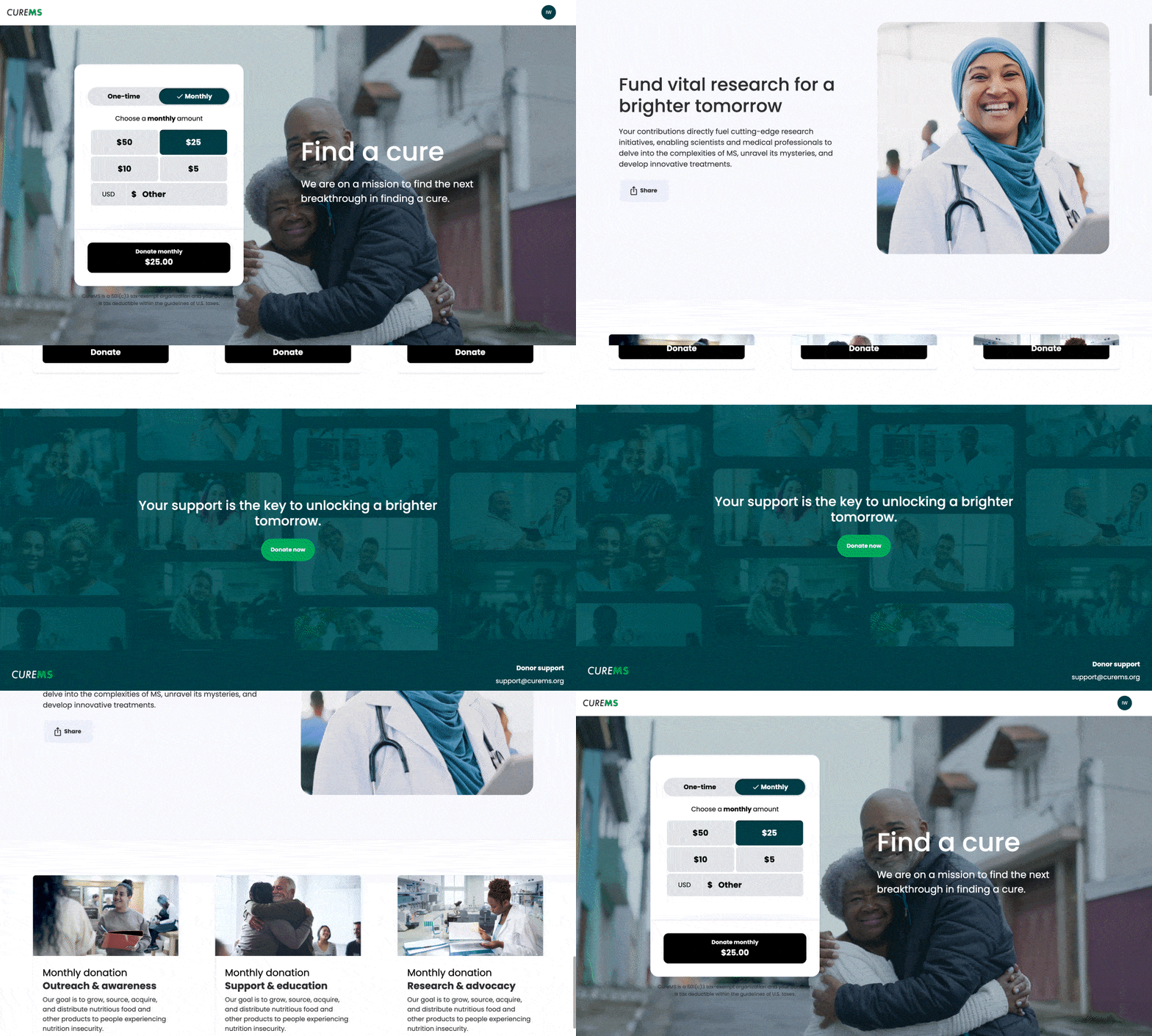
Pair your grants with donor-centered fundraising from GoFundMe Pro
While nonprofit grants can play a significant role in your organization’s strategy, they won’t cover all your expenses. Stewarding individual donors through targeted fundraising campaigns can provide crucial supplemental revenue to support your mission.
Trust GoFundMe Pro’s flexible fundraising platform to fuel your direct giving, peer-to-peer, crowdfunding, and hybrid-event fundraising efforts. Our platform provides everything you need to attract supporters, inspire donations, and sustain your mission, including:
- AI and machine learning tools to predict donor behavior and drive more giving
- Customizable donation pages
- Simple social media sharing tools
- Secure nonprofit payment processing
- Intuitive event registration software for nonprofits
- Scalable peer-to-peer fundraising platform
- Smarter technology to fuel recurring donations
- Access to GoFundMe’s community of over 200 million
Explore our pricing or request a demo to see GoFundMe Pro’s fundraising platform in action.
FAQs
What grants are available for nonprofits?
Nonprofits can access grants from government agencies (at the federal, state, and local level), corporations, and private foundations. Common options include federal grants listed on Grants.gov, corporate grants from companies such as Google and Walmart, and foundation grants from organizations like the Gates Foundation and the Ford Foundation. The right grant depends on your organization’s mission, size, and eligibility.
How do nonprofits find grants?
The most reliable starting points are Grants.gov for federal opportunities and individual foundation websites for private grants. Many nonprofits also subscribe to grant databases or work with professional grant writers to stay up to date on new opportunities. Networking with peer organizations in your sector is another effective way to discover lesser-known programs.
How hard is it to get a grant for a nonprofit?
Competitiveness varies widely by grant type. Local community grants from corporations like the Walmart Foundation tend to have lower barriers, whereas major government and foundation grants can be highly competitive with rigorous documentation requirements. Nonprofits with strong impact data, clear project goals, and a track record of responsible fund management are better positioned to succeed at any level.
Do major foundations accept unsolicited grant proposals?
This varies by funder. Many large private foundations, including the Gates Foundation and the Ford Foundation, do not accept unsolicited proposals and instead fund organizations through invited applications or proactive outreach. Others, including community foundations and many corporate grant programs, accept open applications. Always check the grantor’s website for current submission policies before investing time in an application.
Copy editor: Ayanna Julien
See GoFundMe Pro in Action
Subscribe to the GoFundMe Pro blog
Get the latest fundraising tips, trends, and ideas in your inbox.
Thank you for subscribing
You signed up for emails from GoFundMe Pro



Request a demo
Learn how top nonprofits use GoFundMe Pro to power their fundraising.