Alzheimer’s Association brings in almost 1,800 donations and reaches younger donors on GoFundMe
Mission
To end Alzheimer’s and all other dementia by accelerating global research, driving risk reduction and early detection, and maximizing quality care and support.
Challenge
Reach younger donors and grow supporter contact lists
Solution
The Alzheimer’s Association participated in GoFundMe experiments to test new ways to connect with high-intent donors already active on the platform
“Our partnership with GoFundMe is rooted in innovation. It’s a gift to work with a team that wants those learnings and is open to testing, giving us the ability to pivot quickly to find better solutions that benefit all nonprofits, including ours.”
– Lisa Blaney-Koen, Senior Director of Social Marketing and Storytelling
Results from GoFundMe experiments after six weeks:*
Almost 1,800
donations
32%
email opt-in rate from the checkout experiment
Over 2,800
new email addresses
*Based on 2026 GoFundMe data
Collaboration drives innovation
With more than 7 million Americans living with Alzheimer’s and more than 13 million family and friends providing care for them, cultivating the next generation of Alzheimer’s Association supporters is urgent.
Having been involved in the early development of Facebook’s giving tools, the team knew that the best digital fundraising tools are built with nonprofits, not just for them.
So when the opportunity arose to pilot test new products on GoFundMe, they jumped in. This included challenge fundraisers, which turned activities like running and walking into opportunities to support a good cause, and experimentation that tested new ways to increase visibility for nonprofits among people already active on the platform.
You have to be open to trying, failing, learning, and trying again. It’s a gift when you find a partner who wants to do that with you. I feel that energy from the GoFundMe team.
Low-lift experiments, lasting results
Instead of asking supporters to seek them out, GoFundMe’s experiments met donors where they already were and brought the Alzheimer’s Association directly into active moments of giving, including:
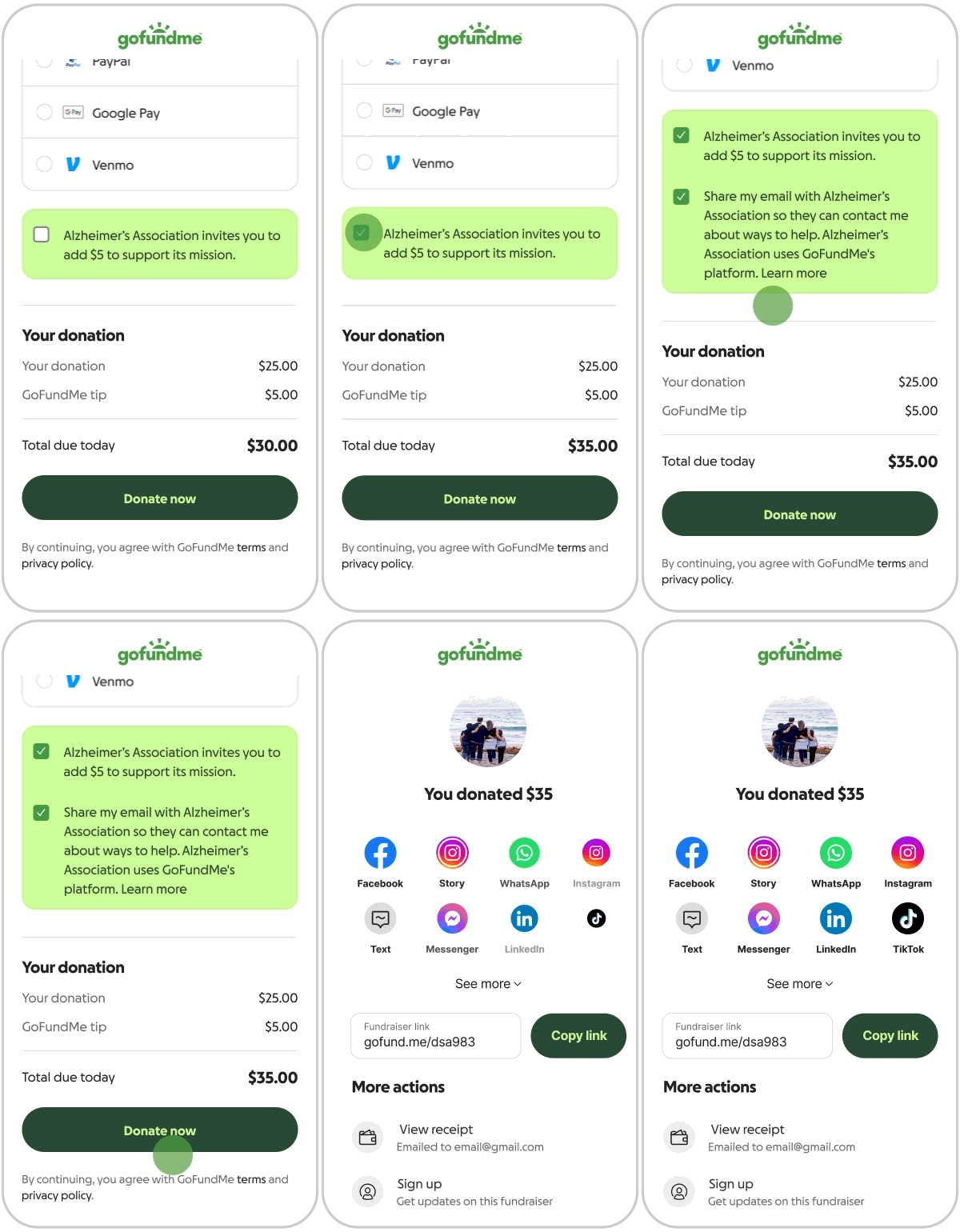
- Giving people the option to share their email and stay connected with the Alzheimer’s Association before completing a donation
- Providing supporters the option to add a voluntary $5 donation for the Alzheimer’s Association during the checkout flow for individuals supporting medical fundraisers on GoFundMe
In just six weeks, these experiments put the Alzheimer’s Association in front of thousands of potential supporters, and were associated with almost 1,800 donations, over 2,800 new email addresses, and a 32% email opt-in rate. This support will help the Alzheimer’s Association reach more individuals impacted by Alzheimer’s and dementia, and fund more projects, 1,200 of which are active in 56 countries.
Reaching the next generation of supporters
Younger generations, especially Gen Z, build trust through their peer networks, according to a report developed in partnership with GivingTuesday. They use their voices and time to make an impact, often in digital spaces, giving in ways that feel personal.
When asked if they’d given in the past week, Gen Z respondents, ages 18-29, were more likely than other adults to say yes across all 12 categories measured in the survey, including volunteering, monetary giving, donating items, advocating, and more.
The report also showed that Gen Z individuals who give via platforms like GoFundMe are 16 percentage points more likely to give to a registered nonprofit than peers who don’t use GoFundMe. This shows that online fundraising platforms actually expand participation and charitable giving.
For the Alzheimer’s Association, this reinforces that they need to show up where people already are, especially to connect with younger audiences. By embracing community-led fundraising on GoFundMe, they’ve created a natural path for younger generations to get involved and find ways to support the organization that works best for them.
Younger donors look to their peers and to storytelling. They want to be part of something bigger, so we need to meet them where they are.
Results reflect the Alzheimer’s Association’s campaign strategy and may vary for other organizations.
Lisa’s GoFundMe tips:
- Look at brand affinity with younger demographics. Show up on platforms they know and trust, rather than asking them to come to where you’re already established.
- Embrace the experiment. A willingness to test, fail, and iterate quickly is invaluable.